A story from the world after the Last War

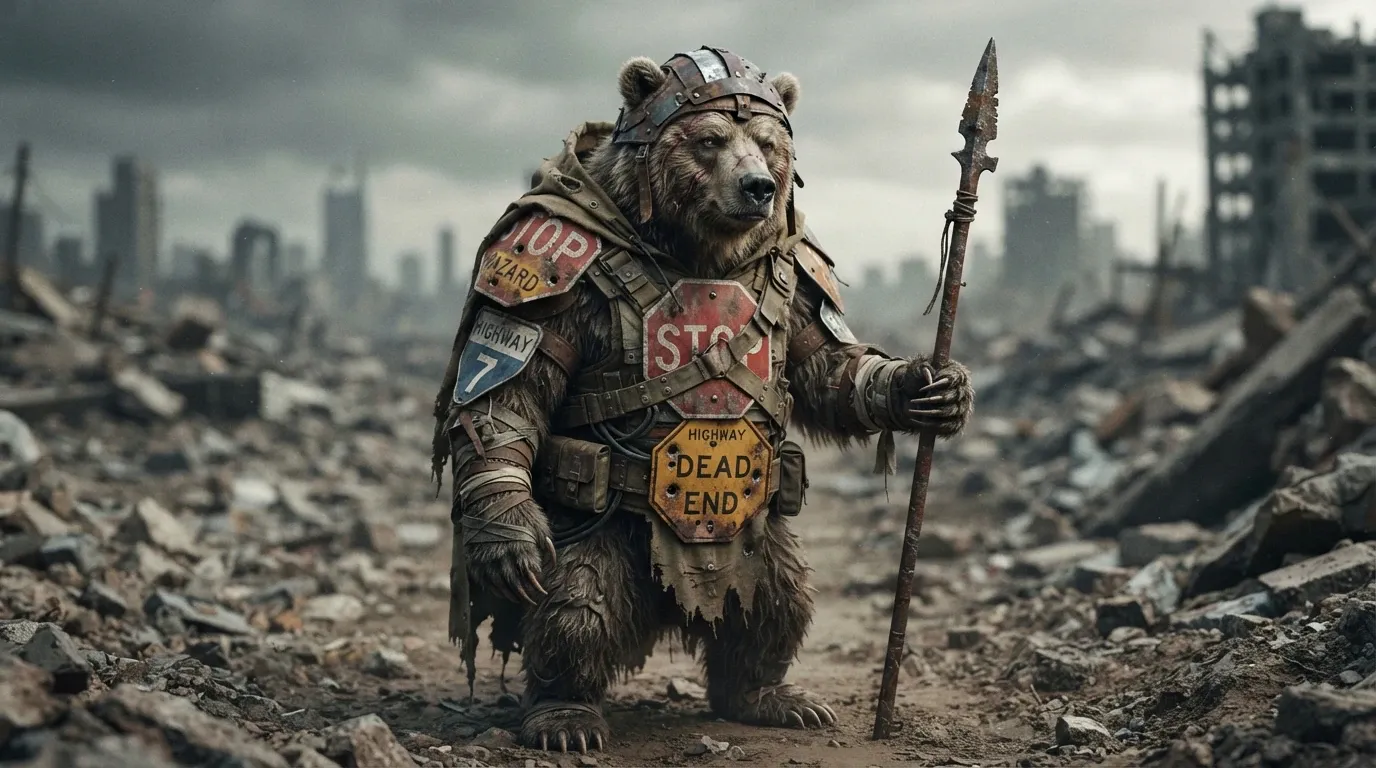
Introduction — The World After
They say the old world didn't end in one day. It ended in a week.
First came the shouting between the nations. Then the missiles. And while everyone above ground was still looking up, the rich were already underground — locked inside giant bunkers with clean air, water gardens, and libraries. The elites, they call them now. They sealed their doors and waited out the fire.
Three generations later, the surface is still sick.
The radiation didn't just kill people. It changed them. Some became Hanimals — poor souls twisted into half-beasts, with a human mind trapped behind an animal's face. And in the old army bunkers, something worse woke up: the Mutas. Bio-weapons grown in labs before the war, built like Hercules and quick as Apollo's arrows. The war ended. Nobody told them.
And then there's everyone else. The renegades. Scavengers, drifters, fighters. They raid elite caravans, they hunt, they bury their friends. Most of them don't believe in anything anymore.
But there is one story even the toughest renegades whisper about.
Europe. The Lost Continent. A land across the poisoned ocean, untouched by the war — so the rumors say. And there live the Acolytes, keepers of old technology so powerful it can pull radiation out of a human body like pulling out a splinter. A cure. A second chance at being human.
Most people think it's a fairy tale told to dying children.
A few are willing to walk to the end of the world to find out.
The Characters
Kate — "Ash"
The leader. A scavenger since she was fifteen, small and quiet and harder than rusted steel. She lost her little sister to the radiation sickness two winters back, and ever since, Kate has believed in nothing. She keeps her face wrapped in scavenged cloth and her eyes on the horizon. She doesn't want to save the world. She just wants the dying to stop — and if that means chasing a myth across an ocean, she'll do it.
Jack — "Lucky Jack"
Kate's oldest companion and self-appointed comic relief. Tall, scruffy, easy grin, terrible luck — the nickname started as a joke and stuck like tar. He carries a rebar spear and an attitude that annoys everyone, including himself. Beneath the jokes, Jack would follow Kate into hell and hold the door open for her.
Frank — "Old Frank"
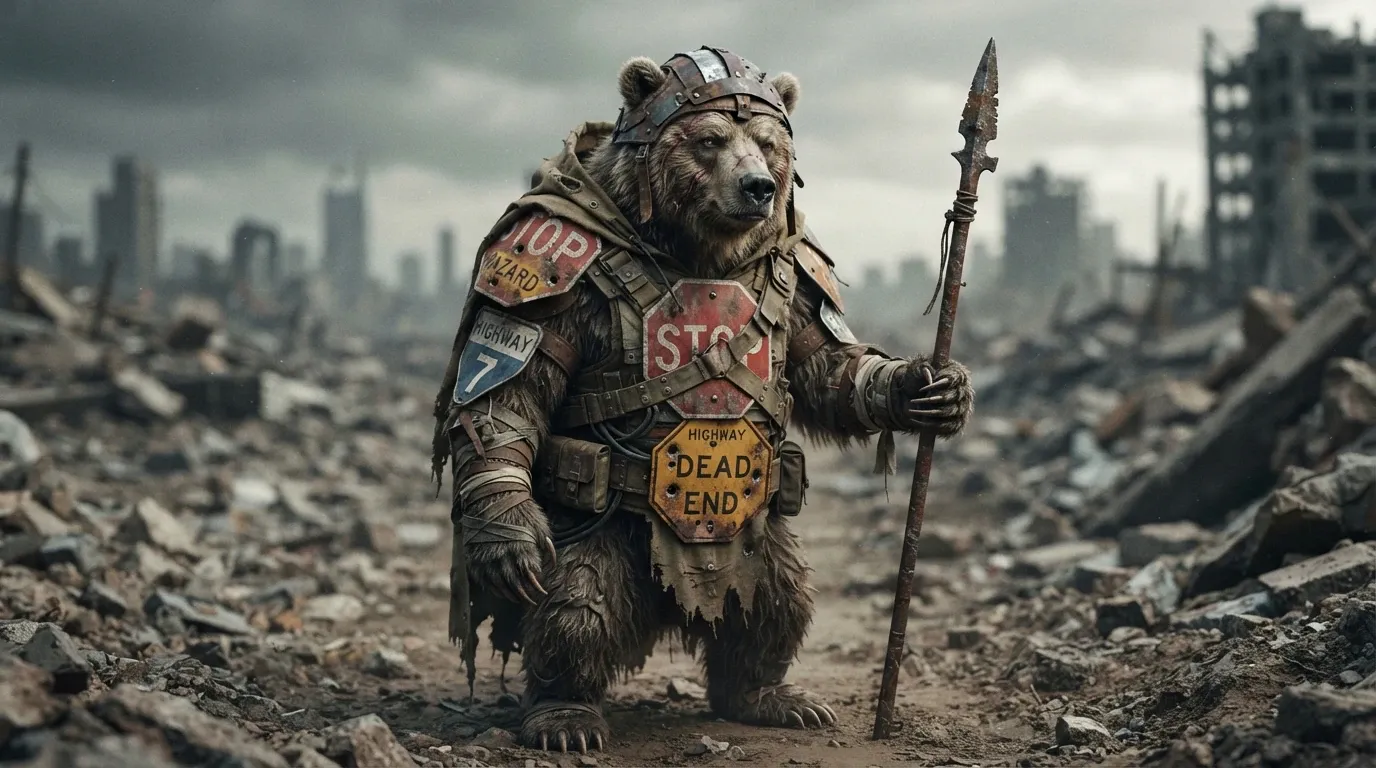
Sixty years old if he's a day — ancient by wasteland standards. He claims he once saw the Atlantic from a rooftop, back when rooftops were safe to stand on. Half storyteller, half walking archive of the old world. His hands shake, his lungs cough black, but his eyes still see far.
Lena — "Ferret"
One half of the twins. Quick-fingered, quicker-tongued, small enough to vanish into any hole or shadow — hence the name. She can strip a supply cart to its bones in minutes and smile while doing it. After losing her brother Danny, her smiles became rarer. Her knives didn't.
Danny — "Drift"
Lena's twin brother. The quieter of the two, the trap-setter, the one who always walked three steps behind and watched everyone's back. The wasteland only gave him twenty-three years. He asked his sister to say hello to Europe for him.
Sam — "Silent Sam"
The shooter. A man of maybe thirty words a week, all of them flat and true. He carries a rifle older than his grandmother and never misses — not once, ever. Some say the silence is grief. Some say it was always there. Nobody asks twice.
Nix
The boy from the pits. Twelve years old, rail-thin, with burn marks on his arms shaped like handprints. The elites kept him as a fighting slave in their underground games, until he did the impossible and escaped. He calls himself Nix because he's "hard to catch." He is the only one who knows what the elites truly fear: Europe.
Captain Ruth
Leader of the Drift — the boat people living offshore in a city of lashed-together hulls. A mechanical leg, radiation burns she wears uncovered like medals, and a stare that can strip paint. She doesn't believe in fairy tales. She believes in prices, deals, and her dying people.
The Threats
The Elites — the rich who hid underground. They live slow, filtered deaths in sealed cities, and they come to the surface in white carts to harvest renegades for their pit games. Their power rests on one simple fact: everyone above ground is dying, and they are not. A cure would end everything they are.
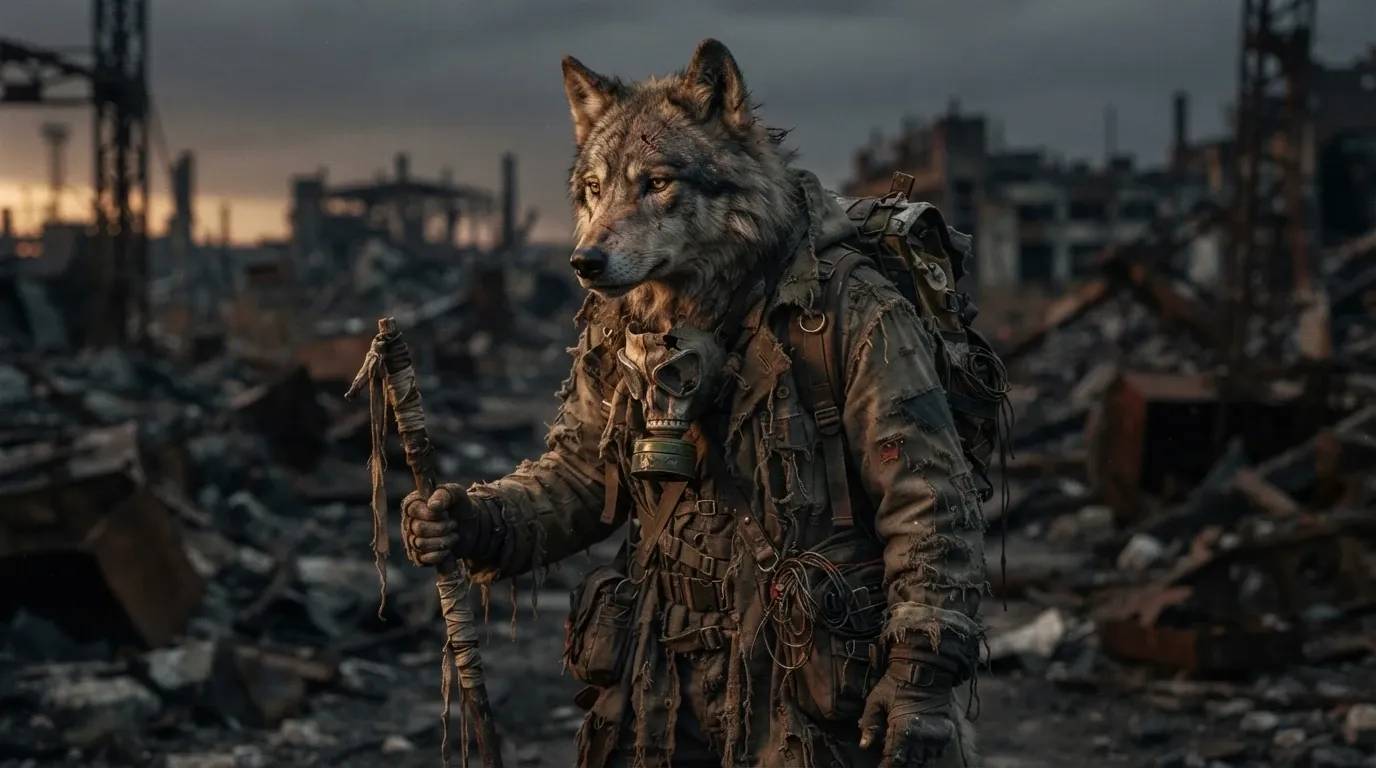
The Hanimals — mutants, half human, half animal, born from a century of poisoned ground and poisoned wombs. Boar-faced, claw-handed, wolf-gaited. Most have lost their minds to hunger. Some still have human eyes. Those are the worst to look at.
The Mutas — the old world's final mistake. Grown in army vats as living weapons: massive as Hercules, fast as Apollo. They don't hate. They don't rage. They are simply built — for war that ended a hundred years ago — and they are very, very bored.
This is the story of five renegades, a boy, and a boat full of strangers — sailing east on nothing but a dead man's map and a rumor older than the war.
Chapter One begins in Ancient York.
Introduction — The World After
They say the old world didn't end in one day. It ended in a week.
First came the shouting between the nations. Then the missiles. And while everyone above ground was still looking up, the rich were already underground, locked inside giant bunkers with clean air and gardens and libraries. The elites, they call them now.
Three generations later, the surface is still poisoned.
The radiation didn't just kill people. It changed them. Some turned into Hanimals — poor souls twisted into half-beasts, with a man's eyes looking out of an animal's face. And in the old army bunkers, something worse woke up: the Mutas. They look like men, but bigger — wide as walls, strong as machines, and fast. Fast like nothing alive should be. They were built in labs, before the war, as living weapons. The war ended. Nobody told them.
And then there's everyone else. The renegades. Scavengers, drifters, fighters. They raid elite caravans, they hunt, they die young. Most of them don't believe in anything.
But there's one story even the toughest renegades whisper about.
Europe.
The Lost Continent. A land across the poisoned ocean that survived the war untouched. And there, the stories say, live the Acolytes — keepers of old technology so powerful it can pull radiation out of a human body like pulling a splinter. A cure. A second chance.
Most people think it's a fairy tale told to dying children.
A few are willing to walk to the end of the world to find out.
Chapter One — Ancient York
Kate had been running through the drowned streets of Ancient York for three days when she found the map.
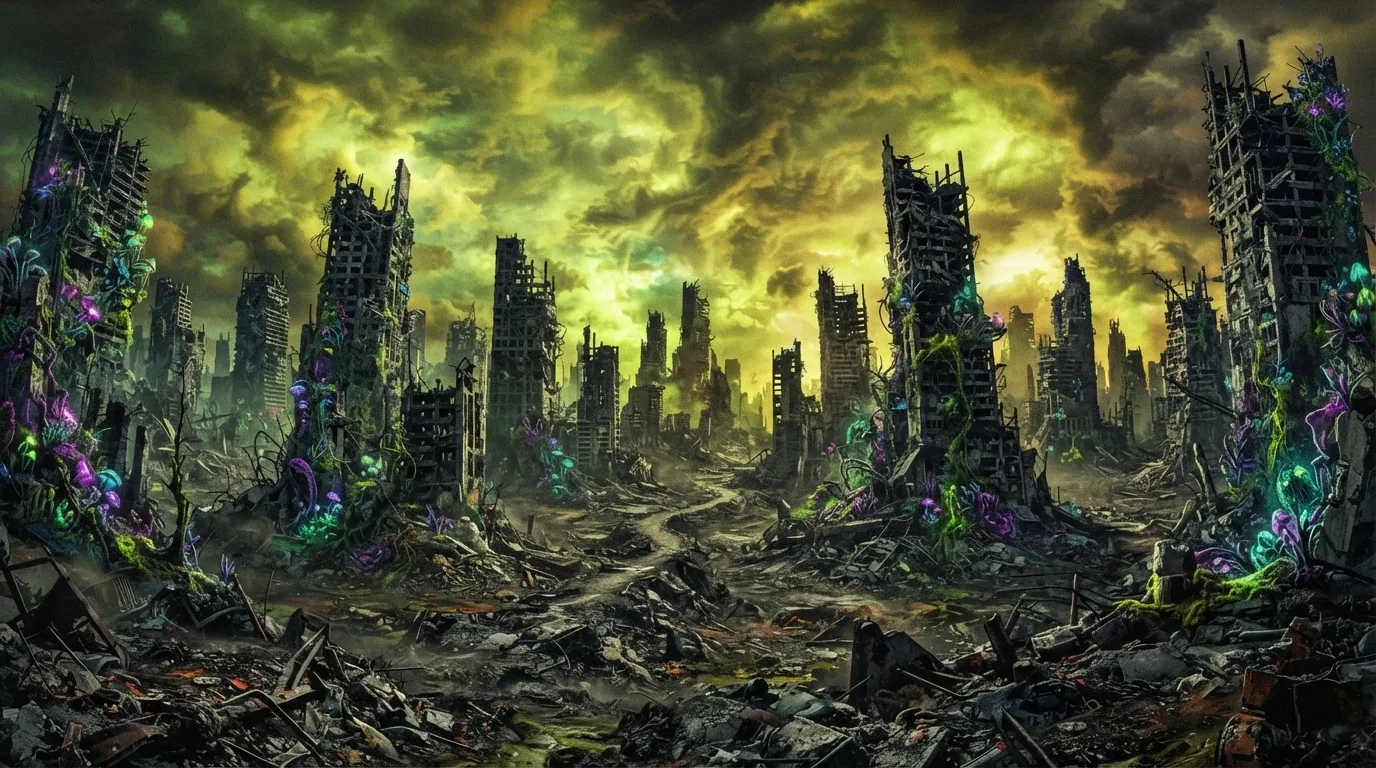
The city was a graveyard of towers leaning over black water like rotten teeth. Half the streets were rivers now. The things that lived in those rivers had too many eyes, and Kate had no wish to count them.
She moved like smoke — quiet, small, face wrapped in scavenged cloth. She wasn't alone. Nobody with a brain travels alone in the wasteland. The ones who do feed the Hanimals.
Her crew was camped in the shell of an old cathedral up on the cliffs, the one with the green copper doors.
There was Frank — everyone called him Old Frank — sixty years old if he was a day, who claimed he'd once seen the Atlantic from a rooftop. Nobody believed him, but nobody argued either. Old Frank had earned his stories.
There were the twins, Lena and Danny — quick-fingered, quicker-tongued, who could strip a supply cart to its bones in minutes and smile while doing it.
There was Sam, quiet as stone, who carried a rifle older than his grandmother and never, ever missed. They called him Silent Sam, and the name fit like a glove.
And there was Jack — Jack with the easy grin and the bad shoulder, who followed Kate into every ruin and out of most of them. She called him Lucky Jack, mostly to annoy him, because his luck was, honestly, terrible.
It was Jack who found the body.
"Down here," he hissed from the cathedral's crypt. "Kate — you need to see this."
The dead man had been an elite courier. You could tell by the suit — grey, seamless, made of some self-repairing fabric the surface hadn't seen in decades. But the radiation got him anyway. Black veins crawled up his neck like ivy.
So much for the elites' safe bunkers, Kate thought. It wasn't a cure down there. Just a slower death.
In the courier's hands, clutched to his chest like scripture, was a metal cylinder.
Old Frank cracked it open with shaking fingers. Inside, rolled in plastic older than the war, was a coastal chart. Real paper. And at its far edge, written in faded blue ink:
EUROPE — SURFACE RADIATION: NOMINAL. THE ACOLYTES MAINTAIN THE CLEANSING ARRAY.
"Nominal," Lena breathed. "That means clean."
"That means fairy tales," Sam said quietly. But his eyes never left the map.
Kate traced the blue line with one scarred finger. She had lost her little sister to the sickness two winters back. She had watched the black bloom spread under her sister's skin like a flower made of rot. Since that day, Kate believed in nothing.
"Europe is a bedtime story," she said.
"So was Lost Vegas," Jack said, grinning, "and we walked out of there alive."
Chapter Two — Lost Vegas
They moved southwest through the glasslands, where old bombs had melted the sand into green sheets that sang in the wind.
On the fifth day, the Hanimals found them.
There were six, maybe seven. Hard to count, because they moved wrong — too low, too fast, on knuckles and heels like wolves that had learned to hate. The biggest one had been a man once. You could still see it in his eyes. Half his face was a boar's, tusks curling through cracked lips — but the eyes were human. Terrified. Furious at being terrified.
"The radiation doesn't just change the body," Old Frank whispered, leveling his ancient pistol. "It files the mind down to one point. Hunger."
The fight was short and ugly.
Sam put two rounds through the boar-thing's chest before it crossed twenty yards. The twins' traps took two more. The rest broke off into the glass, screaming sounds that were almost words.
But they lost Danny that night.
Not to the Hanimals — to a scratch. One bead of black blood in one small cut, and by moonrise the veins in his arm had started to darken. Lena held his hand the whole time. He was almost laughing when it took him.
"Tell Europe I said hello," he said.
And then the laughing stopped meaning anything.
They buried him shallow, in sand gone to glass. No marker. The wasteland doesn't keep monuments. Lena didn't cry. She just stared east for a long time.
Lost Vegas rose out of the desert like a mirage that had died and refused to admit it. The towers still stood, gutted, their dead signs a hundred years dark — leftovers from a people who had worshipped luck in a world that ran out of it.
They picked through the ruins for supplies. And in the vault of an old casino, they found the boy.
He was maybe twelve. Rail-thin, with burns on his arms shaped like handprints. Not from heat. From the elite harvesters.
He called himself Nix — because, he said, he was "hard to catch."
"They take people," he told them around mouthfuls of dried mule. "The shiny ones. The elites. They come up from underground in white carts and take renegades. For the pits. They got games down there, in their sealed city. They bet on us, like the old people bet on cards."
"How do you know?" Sam asked.
"'Cause I was in the pits." Nix pulled up his shirt. The scars had letters cut into them. "I got out. Nobody gets out. But I did."
Then Kate showed him the map cylinder. His whole face changed.
"That's real," he whispered. "I heard the elites talking. They're scared of it — Europe, the Acolytes. They say the Acolytes have the Array, and the Array can clean the whole world, top to bottom. The elites don't want it found. A clean world is a world where everyone is equal again. Their whole power is that everyone up here is dying."
Kate looked at her crew.
Lena, hollow-eyed. Old Frank, coughing black. Sam, who never missed, but was missing pieces of himself. Jack, whose shoulder had never healed right. And Nix — a boy who had been written on with knives, and lived.
"We're going," Kate said.
Chapter Three — The Mutas
The elites heard about it before the crew reached the coast. Of course they did. Their drones still patrolled the sky, thin as vultures, watching everything that moved.
The Mutas came for them in the badlands west of the flooded Mississippi, where the earth was still cratered from the last exchange.
Everyone had heard stories about the Mutas. But stories don't prepare you for the sound.
A low hum, like a giant plucked string, that you feel in your teeth before you hear it in your ears. Then the ground thumped — and a man stepped out of the dust.
He was seven feet tall if he was an inch. And he was wrong the way a knife is wrong in a nursery — all purpose. Muscle stacked like armor on a frame that shouldn't have been able to move. And yet he moved like poured water. He crossed fifty yards in the time it took Sam to raise his rifle.
Sam fired.
The Mutas leaned — just leaned, at a speed no man should have — and the bullet passed his ear. Then he was among them.
Jack met him with a rebar spear and held for almost four seconds. That was longer than anyone alive should have managed. He managed it because Kate was already moving, because Lena was already cutting low — because renegades fight the way wolves fight. Together, dirty, forever.
The Mutas backhanded Jack into a wrecked tank hard enough to fold the armor. He caught Lena's blade in his bare palm and snapped it like kindling.
For one heartbeat, his eyes met Kate's. And she saw the worst thing she had ever seen in the wasteland:
He was bored.
He had been built to fight armies. Five dying scavengers were an errand.
Then Old Frank fired the courier's flare gun — the one weapon they hadn't known was loaded — and the sky screamed white. The drone pacing them overhead came down in pieces.
The Mutas paused to look up.
"NOW!" Kate screamed.
All five of them hit the wall of a crater at once — and the far side, undermined by a hundred years of rain and rot, collapsed and buried the Mutas to the chest.
He began to climb out of the earth like a man rising from bed.
They ran.
There was no shame in it. The wasteland only keeps the ones who know when.
They ran for two days. On the third, Jack's breath started to whistle, and they all knew his ribs were worse than he'd said.
"We don't make it to the coast like this," Lena said. "He'll die on the road."
"He dies on the road or he dies here," Sam said flatly. Then, when everyone stared at him: "What? It's the truth. Truth's all I've got left."
But Nix was grinning.
"There are renegade camps by the sea," he said. "Boat people. My mother came from there. They hate the elites more than anyone — 'cause elite drones keep sinking their hulls. If we bring them something they want..." He held up the courier's cylinder. "...maybe they take us across."
"And why would boat people want a map?" Kate asked.
Nix's grin got wider. "Same thing you want. A world that's clean."
Chapter Four — The Edge of the World
The boat people called themselves the Drift.
They lived in a city made of lashed-together hulls, half a mile offshore, beyond the reach of the elite patrols. Their leader was a woman named Captain Ruth, who had a mechanical leg and radiation burns across half her face that she wore uncovered, like rank insignia. Nobody called her anything but Captain. She had earned that too.
She studied the map for a full hour without speaking.
Then she looked up at Kate.
"This is the third map like this I've seen. The first two were fakes — grown in elite labs to send dreamers sailing into dead zones." She tapped the blue ink. "But this one's real. The ink carries a radiation signature only elite labs can make. Nobody up here can fake that." She stood. "Here's my price. Half my people are dying. The sickness gets into everything — the fish, the rain, us. If your Array is real, my people go through it first. Before you, before anyone. Deal?"
"Deal," Kate said.
They sailed in the darkest part of the year, when storms hid their wakes. Nine hulls, lashed in threes, creeping east across an ocean that had become a soup of old poison.
On the second night, the elite sea-drones found them — black shapes skimming the waves, spitting fire.
The Drift had been fighting drones for a generation. They had nets of woven copper wire, and catapults that threw dead engines into the sky. The battle raged an hour, lit green by corrupted light rolling in the swell.
Two hulls burned.
The rest sailed on.
On the twelfth night, the wind died completely. The sea lay flat as glass. Someone at the bow shouted, and everyone crowded forward.
On the horizon — faint as a heartbeat — a light.
Not fire. Not lightning. A steady, white, clean light, the color of the moon before the war, rising from a shore they had crossed a poisoned ocean to reach.
Land. Green, unburned land.
Jack, grey-faced, ribs bound, stood at the rail with the rest. "Is it—" he started.
And then the light pulsed — once, twice — and across the water, faint on the dead air, came a sound like a bell made of ice.
And every person on those hulls felt the same impossible thing. The thing nobody had felt since before anyone alive was born.
The air was clean.
Their lungs knew before their eyes did. The radiation — the constant companion, the slow black tide in their blood — it was gone, thinned to nothing on the edge of that shore, scrubbed away by the Array the Acolytes had kept running through a hundred years of darkness.
Kate thought of her sister. Of Danny in his glass grave. Of the Mutas climbing out of the earth. Of the elites sealing their doors a little tighter, somewhere far behind, in their dying world of filtered lies.
She thought of the boar-faced Hannimal with human eyes, and wondered — if the Array could clean a body, could it also give a man back his face?
"Look," Nix whispered, pointing.
Small shapes were moving down to the water's edge on the green shore — figures in white, unhurried, waving lanterns in a slow, old pattern. A welcome.
Or a warning.
It hardly mattered.
The renegades had reached the myth. Now they would learn what myths are for.
Behind them, the wasteland burned on — Ancient York, Lost Vegas, the glasslands, the pits. All of it still dying, still waiting.
But ahead, in the clean white light, a second chapter of the world was waiting to be written.
And the renegades — the ones the old world threw away — were going to write it.