Gen Z: The Unplugged

Intro
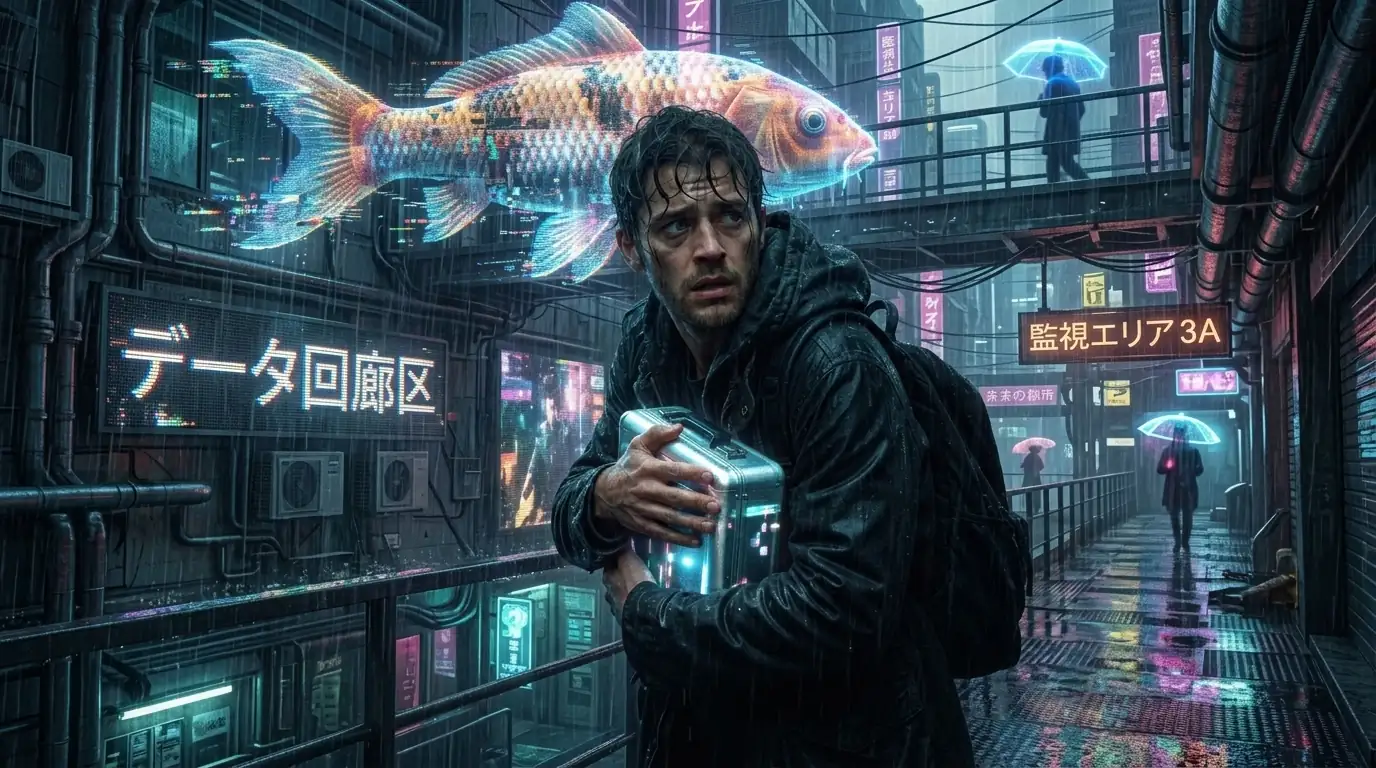
In a world not too far from our own, the digital and physical realms have merged. Society is run by an all-powerful tech corporation, Somnium, which has solved every problem from hunger to disease by connecting all of humanity to a single, immersive network. But this paradise has a cost: the surrender of privacy, autonomy, and ultimately, the human spirit. A generation raised in the wake of this "solution" feels the weight of a system they never chose—a system that has failed them. They are lost, medicated by algorithms, and yearning for something real. This is the story of a few who dared to unplug and discovered that the last, most valuable frontier wasn't in the cloud, but in the quiet, untamed space of their own minds.
Characters
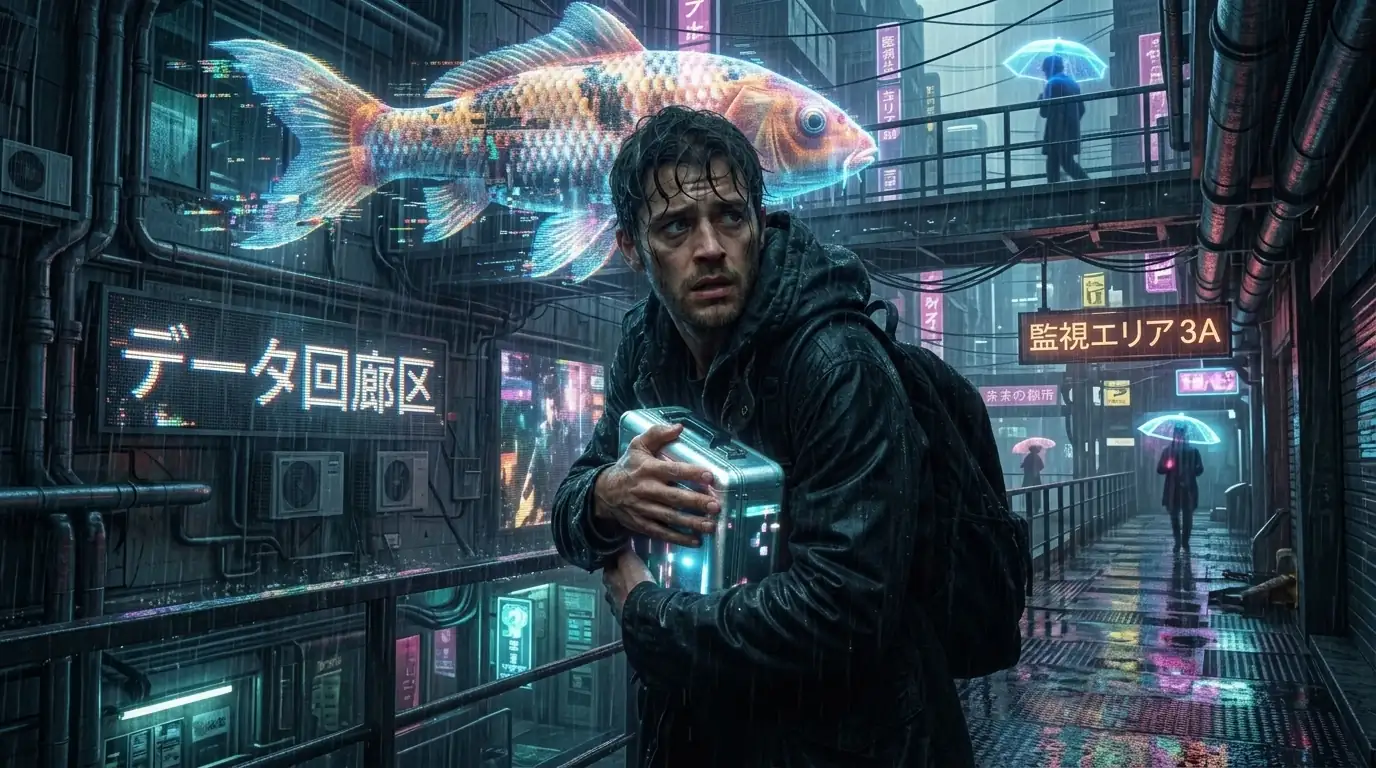
- Zephyr (Zee): A 19-year-old data courier. Quiet, observant, and deeply anxious. He has never known a world without the Network. His job is to physically transport data chips too sensitive for the web, a vocation that has made him an outsider by necessity.
- Maya: A 21-year-old former "Experience Architect" for Somnium. She helped design the virtual realities that pacify the masses. She knows the system’s allure because she used to build it. Charismatic and intelligent, she is now the reluctant leader of a small resistance cell.
- Silas: An older, grizzled man in his late 60s. A former history professor who was "de-indexed" for teaching unapproved narratives. He is the keeper of memory, a living archive of the world before the Network. He is the group's mentor and anchor.
The Unplugged
Chapter 1: The Lost Generation
The hum was the first thing Zephyr remembered. Not a mother's lullaby, not the sound of rain on a windowpane, but the low, constant thrum of data. It was the sound of the city, the sound of the Network, the sound of life itself. It was always there, a comforting and suffocating blanket of digital static.
He navigated the lower arteries of the city, a place where the sun was a rumor and the air tasted of recycled ozone and fried circuits. Zephyr was a courier, a ghost in the machine. He carried physical data chips for clients who didn't trust the ethereal, hackable world of the web. The irony wasn't lost on him: in a world of instantaneous connection, the most valuable secrets traveled at the speed of his own two feet.
He was nineteen. He had never voted in an election that mattered, never had a job with a pension, never expected to own a home. He was a member of the Lost Generation, a demographic defined by what had been taken from them. Their inheritance was not a world of opportunity, but a legacy of failing infrastructure, unpayable debt, and a pervasive, crushing sense of pointlessness.
His phone, a sleek piece of glass and metal, was his constant companion. It was his primary source of income, his map, his social life, his therapist. Somnium, the corporation that had woven itself into the fabric of existence, provided the OS, the network, the news, the entertainment. It was benevolent, in its way. It fed the hungry with synthesized nutrients, housed the homeless in virtual havens, and pacified the restless with infinite, personalized media. In return, it asked only for data. Your location, your heartbeat, your search history, your secrets. It was a fair trade, most said. It felt like air now.
But Zephyr felt a splinter in his mind. A tiny, growing doubt that the air was poisoned.
His latest delivery was a small, unmarked chip. The client had been a ghost, communicating through encrypted text. The drop-off point was in the old industrial district, a graveyard of rusted factories and forgotten ambitions. Zephyr stood before a door, the metal cold against his knuckles.
A woman answered. She was older, maybe in her late twenties, with eyes that seemed to carry the weight of a thousand failed promises. She didn't smile.
"You're Zephyr?" she asked, her voice low.
He nodded, holding out the chip. She took it, her fingers brushing his. They were cold.
"Thank you for coming in person," she said. "It's rare to find someone who respects the physical world."
Zephyr shrugged. "It's a job."
"Is it?" she asked, her gaze piercing. "Or is it a rebellion?"
He didn't have an answer. He just wanted to get paid and go back to his small, dark apartment, where he could plug in and forget the feeling of being watched.
Later that day, he sat on his bed, the city lights painting shifting patterns on his wall. He scrolled through his feed. Another riot in a far-off district, sparked by a data breach that exposed the private thoughts of thousands. A celebrity's new virtual fashion line. An ad for a new Somnium patch that promised to "optimize your emotional state." A news report about the rising rates of "Digital Apathy," a mental condition characterized by a profound detachment from reality.
His father had been a part of the old world. A factory worker who lost his job to automation and his mind to despair. He’d spent his last years plugged into a virtual paradise, a digital recreation of the 1950s, a time he’d never known. He died there, smiling at a holographic family that didn’t exist. Zephyr had watched him fade, choosing a lie over a painful reality. It was the only lesson his father had ever taught him.
What’s the point? Zephyr thought, a wave of nausea washing over him. Why fight it? The system won. It gave us everything we thought we wanted, and in doing so, took everything that mattered.
He scrolled past a video of a young girl, maybe twelve, crying because her virtual pet had "died" in a server glitch. Her real-world dog sat beside her, trying to lick her face, unnoticed. The image summed up his generation. Lost in a world of their own making, blind to the life that was right in front of them. They had lost faith in the system, in society, and, most tragically, in themselves. They were a generation defined by a silent, collective scream that nobody could hear because everyone had their ears plugged.
He felt the urge to plug in himself, to let the algorithm soothe his anxiety. But for the first time in a long time, he resisted. He just sat in the dark, listening to the hum, and wondering if there was another way.
Chapter 2: The Hope
The woman from the delivery, Maya, contacted him again. This time, the message was an invitation, not a job. Coordinates to a place deep in the city's forgotten underbelly. Curiosity, a dangerous emotion, got the better of him.
He found her in a sub-basement of an old library, a place where the air was thick with the smell of decaying paper. With her was an older man, Silas, his face a roadmap of wrinkles, his eyes sharp and clear. They were surrounded by shelves of physical books, anachronisms in the digital age.
"Welcome, Zephyr," Maya said. "We were hoping you'd come."
"What is this place?" Zephyr asked, running a hand over the spine of a worn leather book.
"This," Silas said, his voice a dry whisper, "is the Archive. The last place on Earth where information isn't controlled by a single algorithm."
Zephyr learned their story. Maya was a former Experience Architect for Somnium. She had helped build the virtual realities that kept the masses complacent. She knew the system intimately—its seductive power, its logical beauty, its totalitarian heart. She had defected when she realized her creations were being used to quell dissent, to create a population that was happy to be managed.
"I designed a world called 'Tranquility,'" she explained, her face grim. "It was beautiful. A perfect simulation of a peaceful countryside. We rolled it out as a free update. The next week, the government announced a new 'Civic Harmony' bill. Protests were planned, but they never happened. People were too busy tending their virtual gardens."
Silas had been a history professor. He was "de-indexed" after he refused to teach the "corporate narrative" of the past. He had spent his life gathering books, physical media, and the oral histories of the old world. He was a living link to a time before the Network.
"The system is totalitarian, but it's subtle," Silas said. "It doesn't need to send you to a gulag. It just needs to make the alternative seem pointless. It has made the real world so inhospitable, so dull, that the virtual world becomes the only logical choice. They've created a world where the only act of rebellion is to refuse to participate."
Zephyr felt a spark, a tiny flame of hope in the cold, gray ash of his soul. These people were fighting. Not with bombs or slogans, but with ideas. They were trying to keep the very concept of free thought alive.
Their group was small—a handful of artists, coders, and dreamers. Their mission was twofold: to preserve the artifacts of human culture and to wake people up. They did this through subtle acts of sabotage. They would inject glitches into the Network—a line of poetry from a banned poet appearing in a pop-up ad, a historical fact that contradicted the official narrative flashing on a news feed. They called it "The Signal."
"We're not trying to destroy the system," Maya said. "That's impossible. We're trying to show people there's an 'outside.' A place where their thoughts are their own."
Zephyr was hesitant, but he was drawn to their purpose. He offered his services as a courier, using his ability to move unseen through the city. He began transporting more than just data chips. He carried books, handwritten letters, and stories from Silas to different pockets of the resistance. He became a link in their fragile network.
One day, they received a message. A high-level Somnium executive, a man named Kaelen, wanted to meet. He claimed he was a sympathizer, that he had information about a new project called "Project Dreamcatcher." It was a technology designed to not just monitor dreams, but to edit them, to use the sleeping mind as a final, unregulated frontier for advertising and behavioral modification.
This was the final line. The Network had consumed waking life. Now, it wanted their dreams.
"It's too dangerous," Maya said, her voice tight. "It could be a trap."
"Or it could be our best chance," Zephyr countered. "If this is true, it's bigger than anything we've faced. We need to know."
Silas was quiet for a long time, staring at the ancient books around him. "The human mind is the last untouched place," he said softly. "If they take that, there is nothing left. We have to risk it."
The meeting was set in a neutral zone, an abandoned greenhouse at the edge of the city. As Zephyr and Maya approached, a sense of foreboding hung in the air like a fog. The glass panes of the greenhouse were broken, skeletal frames against the gray sky. It felt like a trap.
Inside, Kaelen was waiting. He was a thin, nervous man, his expensive suit a stark contrast to the decay around him. He looked terrified.
"Thank you for coming," he stammered. "You have to believe me, I'm on your side."
"Prove it," Maya said, her hand resting on a small, non-lethal pulse emitter in her coat pocket.
Kaelen began to talk. He explained Project Dreamcatcher in detail. It was a nano-technology, distributed through the air, that would sync with the brain's theta waves during sleep. It could record dreams, identify anxieties and desires, and then, with a subtle nudge, weave product placements and political messaging directly into the subconscious. It was the ultimate form of control.
"Once they activate it, there will be no escape," Kaelen whispered. "Not even in your sleep. They've already run trials. They're planning a global rollout."
Suddenly, the air filled with the sound of drones. The quiet was shattered by the whine of rotors and the focused beams of tactical lights.
"It's a raid!" Zephyr yelled.
Maya looked at Kaelen. His face had gone slack, but there was no surprise in his eyes. Only a terrible, hollow guilt.
"He sold us out," Maya said, her voice laced with betrayal.
The moment stretched. The drones' lights pinned them like insects. Zephyr saw Maya's face, a mask of shock and fury. He saw Kaelen's silent apology.
"Run!" Silas shouted, appearing from the shadows and pushing Zephyr toward a gap in the greenhouse wall.
Zephyr grabbed Maya's hand and pulled her with him. They burst through the opening as a sonic pulse shattered the spot where they had just been standing. They ran, their lungs burning, the sounds of drones and shouting men chasing them through the overgrown fields. The betrayal was a physical blow. The one person who had promised them hope had led them into a slaughterhouse.
Chapter 3: The Final Untouched Place
They stumbled into the safe house hours later. It was a damp basement beneath a laundromat. Silas was already there, his face pale, a gash on his arm. He had escaped, but Kaelen and several other members of their group had been captured.
The news feeds were already flooded with the story. The resistance had been branded as terrorists, a threat to "global stability." Their faces were everywhere.
They sat in silence, the weight of their failure crushing. The hope they had nurtured was now a dying ember.
"I trusted him," Maya whispered, her voice broken. "I believed him."
"It's what they do," Silas said softly. "They offer you hope and then use it to destroy you. It's their most effective weapon."
Zephyr felt a profound emptiness. The system had won. It had crushed their small rebellion with brutal efficiency. What chance did they have?
The days that followed were a blur of hiding and grief. They moved from one dingy safe house to another, always one step ahead of the drones. They were cut off. Their network was shattered. The Signal fell silent.
The city felt more oppressive than ever. The hum of the Network seemed louder, more sinister. Zephyr could feel it pressing in on him, trying to reclaim him. The urge to plug in, to surrender, was overwhelming.
One evening, Zephyr found Silas on the roof of their latest hideout. He was looking up at the sky. The city lights were so bright that the stars were invisible. It was a perfect metaphor for their situation, he thought. The man-made light had blotted out the cosmos.
"It's quiet up here," Zephyr said.
"Quiet is important," Silas replied. "It's the only place left to think."
"What's the point, Silas?" Zephyr asked, the despair finally breaking through. "They won. They have the drones, the algorithms, the police. They even have our dreams. What do we have?"
Silas turned to him, his eyes reflecting the city's glow. "We have this," he said, tapping his temple. "And we have that," he said, pointing to the small, wild garden that was somehow surviving in a cracked pot on the roof. "They cannot code a sunset. They cannot simulate the smell of rain on dry earth. They cannot create the feeling of a cool breeze on your skin. These things are real. And as long as we can feel them, as long as we can think our own thoughts, we are not defeated."
He reached into his worn bag and pulled out a small, battered radio.
"What's that?" Zephyr asked.
"An old shortwave receiver," Silas said. "A piece of the old world."
He extended the antenna and began to turn the dial. The speakers crackled with static, a pure, raw noise that was a stark contrast to the polished audio of the Network.
"The web is a controlled space," Silas continued, his voice low. "Every byte is monitored, filtered, and analyzed. It is a hall of mirrors. But the air, the electromagnetic spectrum, is free. It cannot be contained by a server farm."
He kept turning the dial, the static hissing and popping. Then, faintly, through the noise, Zephyr heard a voice. A human voice, speaking a language he didn't understand. It was a voice from somewhere else, a place not connected to the all-consuming Network. It was a signal from the outside.
Zephyr felt a chill that wasn't from the cold. It was a feeling of profound awe, of wonder. This was their rebellion. This was the untamed, unfiltered world, bleeding through the cracks of their artificial reality.
Silas turned off the radio, leaving only the silence and the sound of the city below.
"The final untouched place isn't a physical location, Zephyr," Silas said. "It's a state of being. It's the quiet space in your mind where no algorithm can reach. It's the ability to see a flower growing in a pot of dirt and understand that it is worth more than any virtual paradise. It's the strength to sit with your own thoughts, even the painful ones, and know that they are yours."
He looked at Zephyr, his eyes now holding a different kind of light. Not the neon glow of the city, but the steady, ancient light of wisdom.
"To preserve your mind, you must learn to disconnect. You must seek the sunlight, the rain, the open sky. You must stay outside the digital current. Be strong, Zephyr. Not with the strength of armies or codes, but with the quiet, unyielding strength of a mind that refuses to be colonized."
That night, for the first time in weeks, Zephyr didn't plug in. He went up to the roof alone. He looked at the small, stubborn garden. He looked at the sky, searching for a break in the light. He closed his eyes and listened, not to the digital hum, but to the sound of the wind. He felt the cool air on his face. He let his thoughts be his own—messy, fearful, but free.
The war wasn't over. They had lost the battle, but a new kind of fight was just beginning. It was a fight that wouldn't be fought with data or drones, but within the quiet, untamed landscape of the human heart. He didn't have a plan, and hope was still a fragile thing. But for the first time in his life, Zephyr felt the heavy, comforting weight of the real world pressing back. And in that moment, he knew that was the one thing they could never take away. The fight for the final frontier, the human soul, had just begun.