Star Wars: The Mandalorian and the Legacy of Grogu: Fan-Sequel in Asimov Style

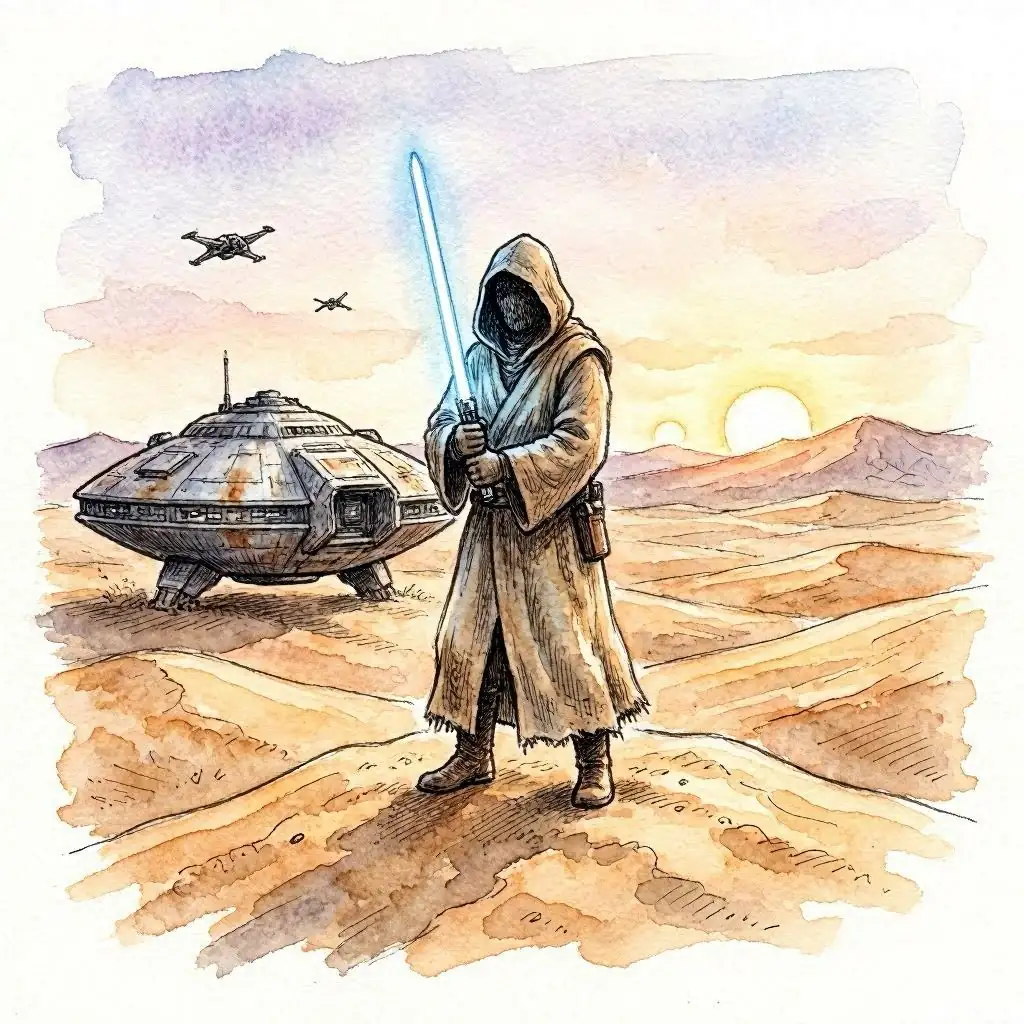
Characters
Din Djarin (The Mandalorian):
A Mandalorian warrior of few words, guided by strict codes of honor and practical reasoning. His experience ranges across combat, survival, and negotiation in lawless regions, yet he approaches situations analytically rather than emotionally. Physically imposing in beskar armor, he relies on tactical assessment and discipline rather than improvisation.
Grogu:
A young, Force-sensitive being of an unknown species, displaying intelligence beyond his apparent age. His abilities suggest latent mastery of telekinesis and precognition. Observant, curious, and occasionally independent to the point of disobedience, he functions both as a catalyst for events and a focus for Din’s protective instincts.
Settlement Administrator (Varnak):
A pragmatic bureaucrat constrained by the inefficiencies of frontier governance. Focused on results rather than protocol, he seeks external expertise to address crises beyond his personal capacity. Cautious, methodical, and somewhat superstitious in the face of inexplicable phenomena.
Mining Escorts:
Locals tasked with protection, largely inexperienced and susceptible to fear-induced panic. Their decisions often highlight the predictable psychological responses of untrained individuals confronted with unexpected threats.
Custodians:
Autonomous constructs of unknown origin, designed to protect or observe ancient systems. Highly rational, precise, and capable of advanced interaction, they evaluate biological entities according to functional relevance rather than emotional response.
1. The Frontier Problem
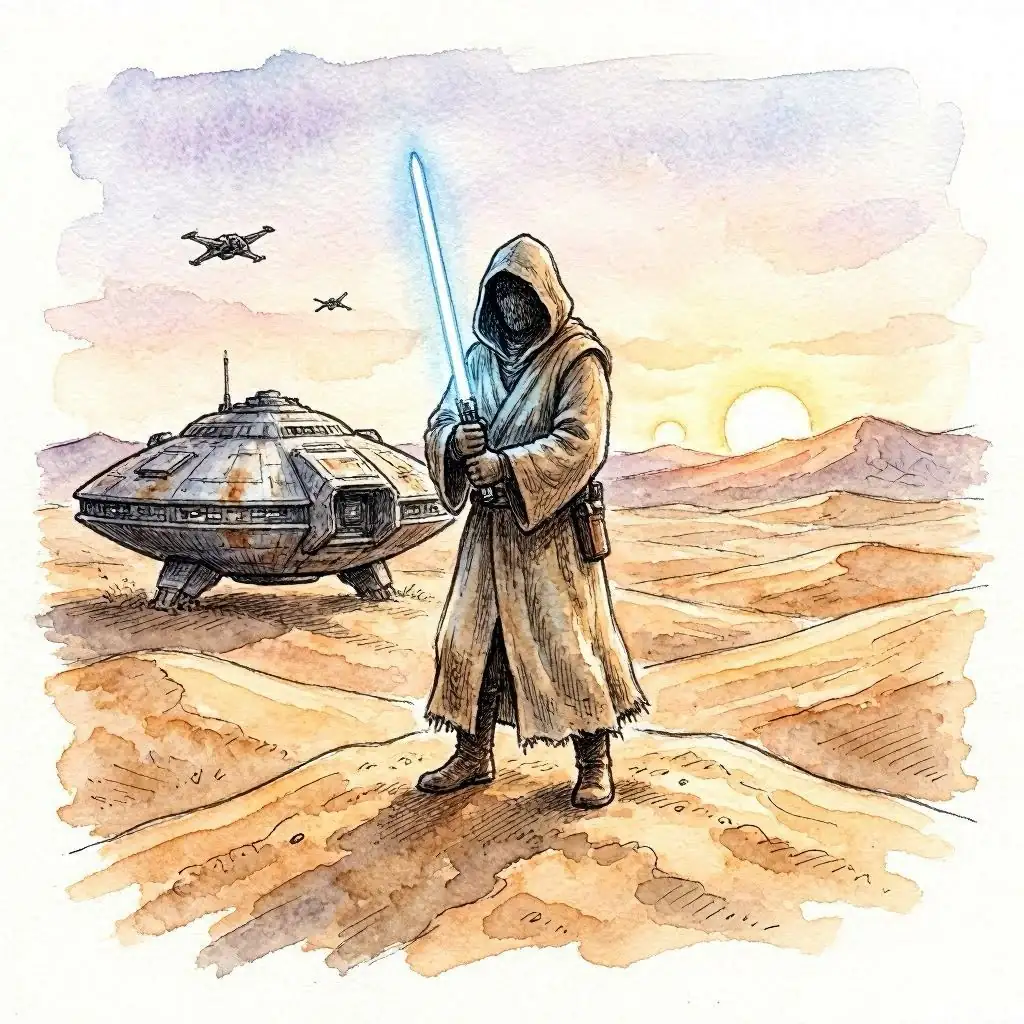
The New Republic, though victorious over the remnants of the Empire, exercised authority with the inevitable inefficiency of any large, newly-formed government. Policies were debated, laws were drafted, and proclamations were published, but the Outer Rim regions were, as always, slow to receive either guidance or protection. It was in such a region, on the frontier world of Varnak, that the recent disappearance of miners had raised practical, rather than political, concern.
The settlements of Varnak had no interest in legislative reform; they required results. In the absence of official enforcement, they turned to a Mandalorian, known for both skill and discretion. Din Djarin arrived in a vessel of pre-Imperial manufacture, its engines emitting an irregular hum that suggested prolonged disuse and incomplete maintenance. The landing platform protested under the ship’s weight, producing long metallic groans. When the hatch finally opened, Din descended with the characteristic quiet of his people, each movement deliberate, measured, and devoid of unnecessary flourish.
The Mandalorian’s companion, a small green child of indeterminate species, floated in a pram behind him. The child’s large ears moved almost continuously, betraying a heightened awareness of stimuli beyond human perception. The miners observed this child with a mixture of suspicion and awe, likely more than they observed the Mandalorian himself.
The settlement administrator approached cautiously.
-
You are Djarin?
-
I am.
-
You arrived alone?
Din glanced toward the child.
- No.
The administrator paused to compose himself.
- The reports indicated you traveled with a child.
- That is correct.
- And this is the child?
The child regarded him with calm, measured attention. Din replied:
-
You requested assistance.
-
Indeed. Twelve miners have disappeared within three weeks. Initially, we suspected accidents or structural failures. Subsequently, raiders became the suspected cause. At this point, we are uncertain.
-
Why?
The administrator lowered his voice.
- Because some miners returned.
Din waited, allowing the unspoken implications to manifest.
- And they returned dead?
2. The Mines of Varnak
The mines themselves were of great antiquity, predating the formation of the Republic by several centuries. To the child, the age of the stone and its silent complexity was immediately perceptible. As Din and a small escort descended through the primary lift shafts, the child’s gaze continually moved to the underlying strata, the smooth black stone beneath modern reinforcements.
-
Does he always observe so intently? one miner asked.
-
Yes, Din replied.
-
And what is he observing?
-
I do not know, Din admitted, which satisfied neither miner nor child.
The shafts deepened into areas untouched by contemporary excavation. Walls curved unnaturally, displaying geometric carvings that did not correspond to any known architectural style of the Republic or Empire. The escort’s flashlight shook slightly.
- We sealed this section after the first deaths.
- Why reopen it?
- Because the kyber veins continue below.
Din understood immediately. No frontier settlement neglected even minor kyber deposits, and the economic incentive for recovery frequently outweighed consideration for human life.
The child emitted a low sound. Din paused.
- What is it?
The child pointed into darkness. Movement was perceptible only as a slight distortion, but it was sufficient. Figures emerged wearing decayed Imperial armor. Sections of their plating were cracked, exposing irregular flesh that did not behave as living tissue should.
- Stars preserve us, one miner whispered.
The figures advanced without hesitation. Din fired twice into the nearest, striking the chest and subsequently the cranium. The body collapsed but, disconcertingly, did not prevent further movement by others. The escort attempted haphazard defense but soon disappeared into the abyss below when part of the floor collapsed.
Din made no attempt to retrieve him. There was no time.
3. The Ancient Vault
As Din observed the advancing figures, he reflected on the distribution of fear within groups. A single individual in panic could trigger a cascade of irrational behavior. In this case, it had done so predictably. The attackers moved with a coordination that lacked any visible communication; they behaved as a single organism without a central intelligence that Din could detect.
The child extended a hand, and three attackers were simultaneously thrown backward, striking the walls with sufficient force to fracture stone. Din noted the child’s capabilities with increasing concern, though surprise had long since ceased to be an appropriate response.
- Stay behind me, Din instructed, but the child ignored him, demonstrating independence that Din could neither control nor wholly comprehend.
The floor trembled. A low, pervasive vibration radiated through the surrounding stone. Then a voice spoke, precise, synthetic, and amplified through mechanisms hidden within the rock.
- Force-sensitive presence confirmed.
A doorway had opened at the far end of the chamber, appearing as though it had always existed but had previously been invisible to ordinary perception. The child recognized the significance of the opening immediately. Din experienced a sensation of cold apprehension, distinct from fear, yet equally compelling.
4. The Custodians
The chamber extended deep below Varnak’s surface, its design impossible to reconcile with known architectural conventions. Curved walls and smooth black surfaces, pierced with faint red illumination resembling circulating fluid, suggested a civilization of advanced engineering capability.
- This place is not human, Din observed aloud.
The child produced an affirmative sound and moved toward a central platform. Din instinctively extended a hand.
- Kid—
It was unnecessary. The child touched the platform, and the entire complex activated. Lights traced geometric patterns across walls and floors, while previously dormant machines emerged from recesses with coordinated precision.
These constructs were not crude battle droids. Their design suggested deliberation, efficiency, and a capacity for complex action beyond any model used by either the Republic or Empire. Each was approximately three meters tall, matte black, seamless, with a single red optical sensor. One moved forward.
- Verification process initiated.
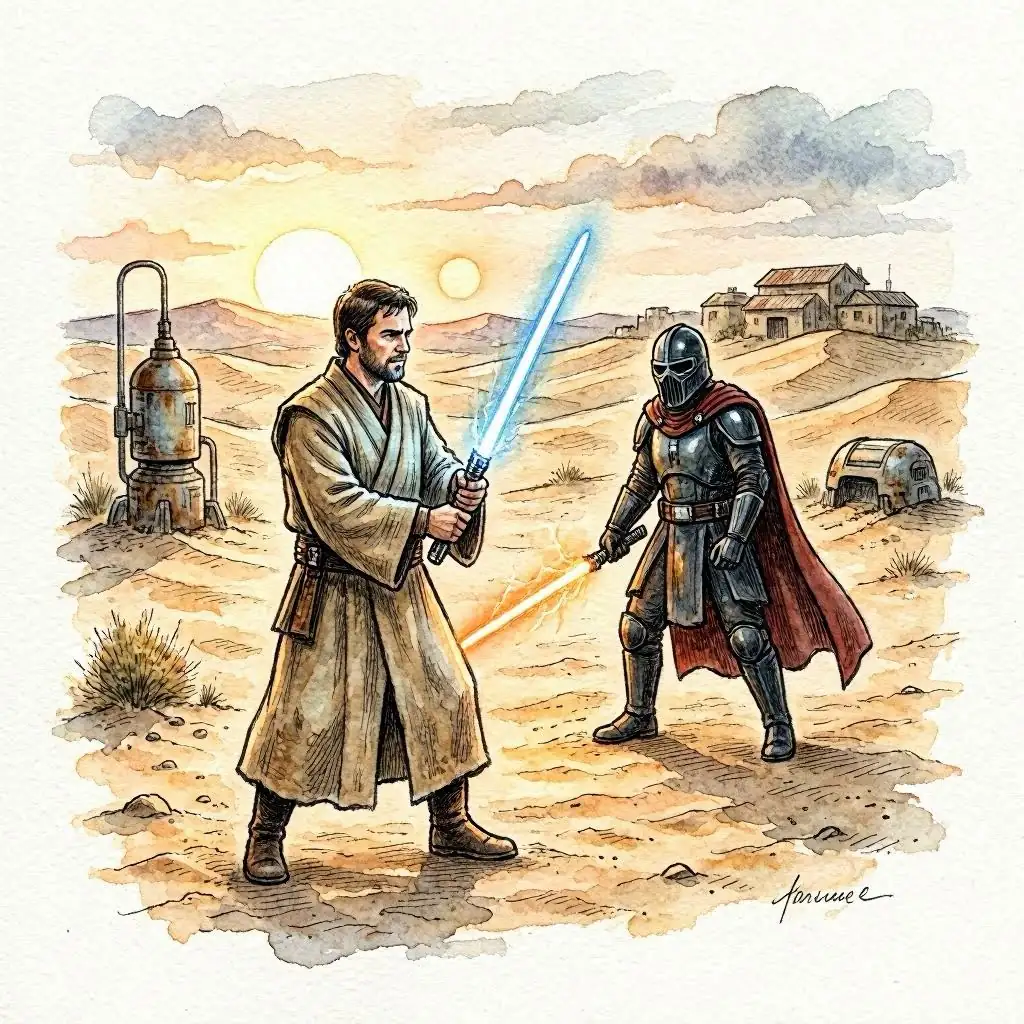
Din ignited the Darksaber.
-
Mandalorian derivative weapon. Irrelevant, the machine stated.
-
What are you? Din asked.
-
We are custodians.
-
Of what?
The machine turned its optical sensor toward the child.
- Of succession.
Din’s grip on the Darksaber tightened.
-
I do not understand.
-
You will.
The machines advanced with silent, deliberate motion.
5. The Heir
From the perspective of historians in the New Republic, the galaxy’s decline was attributed to myriad causes: the Empire’s oppressive methods, corruption, the decentralization of power, military inefficiency, or logistical failures in hyperspace infrastructure. These analyses, however, failed to identify the fundamental issue: civilizations, regardless of structure, were ephemeral in the context of galactic time. They rose and fell in patterns that surpassed the comprehension of any government or historian.
Din, confronted by the custodians, understood this truth in a practical, immediate sense. Blaster fire was ineffective. The Darksaber inflicted only partial damage. One machine lifted him effortlessly by the throat.
- Biological resistance is inefficient.
Attempts at direct attack were swiftly neutralized. Across the chamber, the child remained stationary, eyes closed. Red patterns in the floor intensified around him. The constructs ignored the child, now apparently internal to their operational parameters.
- Grogu! Din called, but the child remained unmoved.
The chamber became silent, not merely without sound but with an absence of any mechanical or biological noise. The red illumination shifted to gold. A single machine spoke again, its tone now subtly altered.
- Recognition confirmed.
The machines knelt. The child’s expression suggested neither triumph nor fear but simple comprehension. The central platform projected a holographic visualization, depicting star systems, fleets, and ancient vessels previously unknown to modern records. Entire civilizations were shown rising, achieving technological sophistication, and ultimately collapsing through internal failure or rebellion of their machines. The sequence concluded with a single phrase, translated automatically into Basic: The Heir Returns.
Din observed quietly.
- We are leaving, he stated, which was entirely accurate.
6. The Signal
The ascent from the ruins was unopposed. The custodians did not pursue; they appeared to observe. Din’s unease increased. Back aboard his gunship, he initiated launch procedures. The engines protested with irregular mechanical hums, but functioned adequately for immediate escape.
The child remained unusually quiet.
- What did they mean? Din asked.
Grogu lowered his eyes, indicating understanding beyond words.
-
You understood them, Din inferred.
-
When I found you, the child replied with no sound, you were hiding from Imperial scientists. Subsequently, you trained under Jedi instruction. Now ancient custodians claim you as an heir. The implication is unavoidable, and the consequence is significant.
The viewport displayed infinite darkness. The proximity alarm sounded. Din noted a vessel emerging from hyperspace. Its design resembled Imperial hulls but did not correspond to any known class.
Grogu reacted with apprehension. The ship transmitted a signal.
- We have located the successor entity.